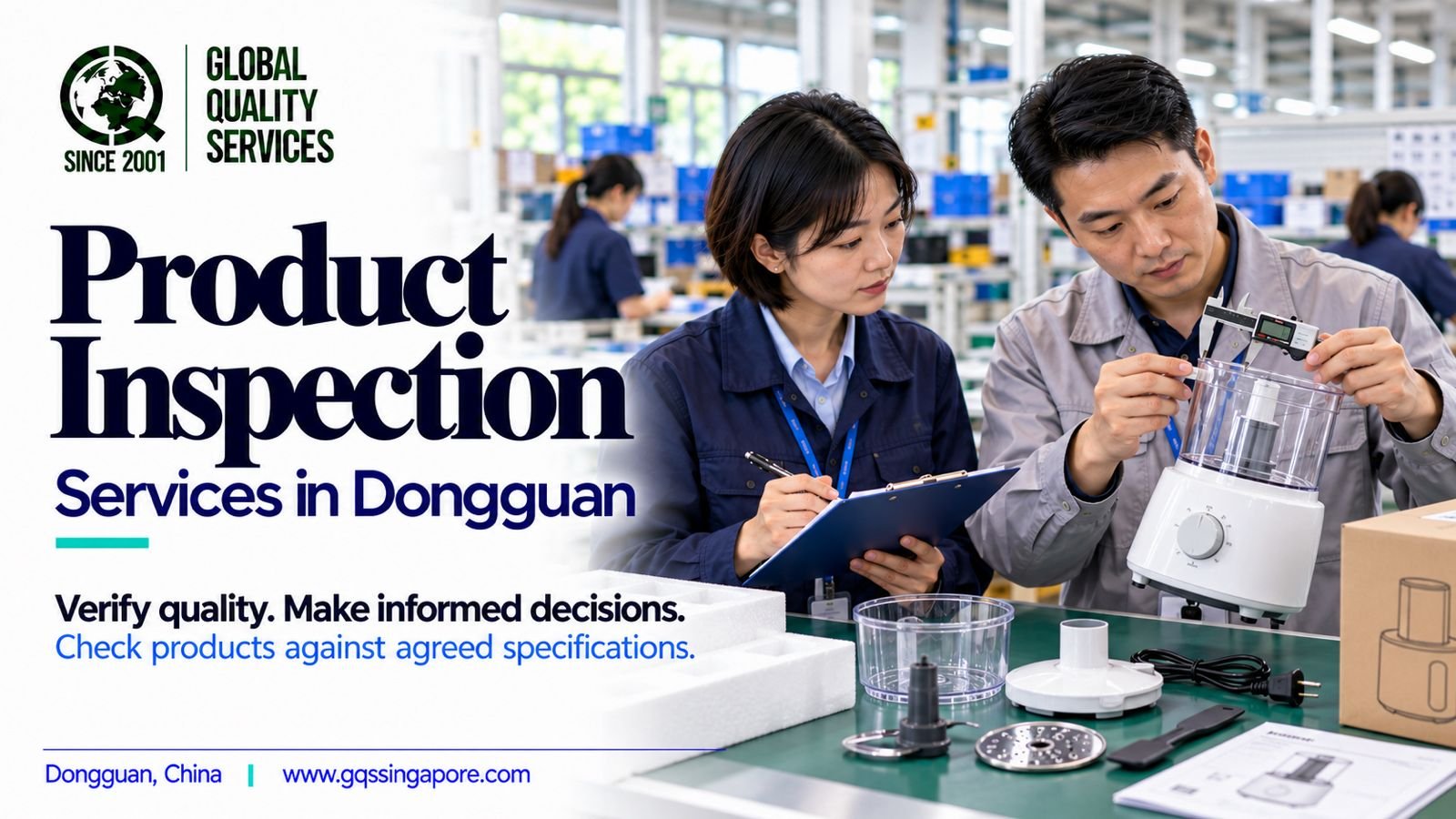
Product quality inspection verifies whether manufactured goods meet agreed specifications, workmanship requirements, functional criteria and buyer expectations. For businesses sourcing products from Dongguan, China, independent product inspection lets you assess goods at selected production stages before they move to the next stage of the supply chain.
Dongguan is an established manufacturing centre in Guangdong Province, with production activities spanning electronics, electrical products, hardware, plastics, furniture, garments, toys and industrial components. Buyers working with local factories may need to verify product quality across different suppliers, production batches and product categories.
Global Quality Services Pte Ltd provides inspection-related services for businesses seeking objective information about product quality and conformity with agreed requirements. Product inspection in Dongguan can cover appearance, workmanship, dimensions, quantities, functionality, product markings and packaging, depending on the product and the agreed inspection plan.
Whether you are sourcing consumer goods, electronic products, mechanical parts or manufactured components, a defined inspection scope establishes what will be checked, how findings will be recorded and which requirements will determine acceptance or rejection.
What Are Product Inspection Services?
Product inspection services involve examining products against specified quality criteria to identify defects, inconsistencies and deviations from agreed requirements. The inspection may take place during production, after manufacturing or before goods are dispatched, depending on the purpose of the check.
A product inspection typically involves reviewing the buyer’s specifications, selecting the products or samples to inspect, carrying out the agreed checks and documenting the results.
The inspection scope may include:
- Visual quality: Scratches, dents, stains, cracks, surface defects, colour differences and other visible issues.
- Workmanship: Assembly quality, finishing, stitching, fastening, joining and component fit.
- Dimensional checks: Measurements, weight, size and other specified physical characteristics.
- Functional checks: Basic operation or performance checks based on agreed test instructions.
- Quantity verification: Confirmation of the number of units or components presented for inspection.
- Labelling and marking: Product labels, model numbers, barcodes, logos, warning labels and required markings.
- Packaging checks: Inner packaging, cartons, protective materials, shipping marks and packaging condition.
- Not every inspection includes every check. The inspection plan should reflect the product type, technical requirements, identified risks and intended use of the inspection findings.
Why Arrange Product Inspection Services in Dongguan?
Dongguan’s manufacturing ecosystem includes suppliers producing goods for domestic and international markets. When purchasing from multiple factories or managing production remotely, buyers may have limited direct visibility into the condition of finished products.
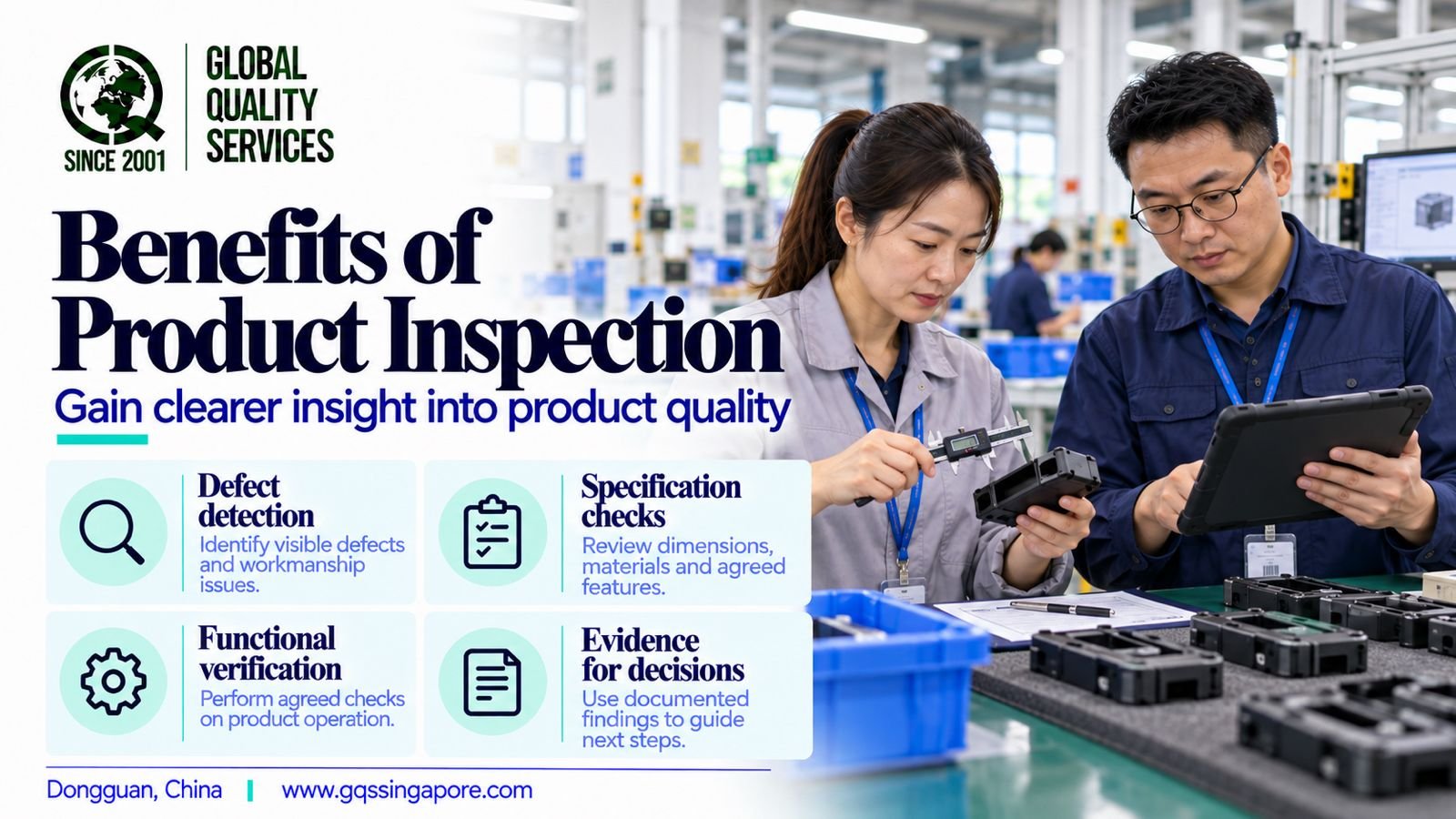
A product inspection creates a documented checkpoint for evaluating goods against agreed requirements before a purchasing or delivery decision is made.
Verify Product Quality Against Specifications
A product may look acceptable at first glance but still differ from the approved sample, technical drawing or purchase order. Inspection checks can identify visible defects, dimensional deviations, incorrect components and other discrepancies within the agreed scope.
Identify Defects Before Dispatch
Inspection before dispatch can reveal issues while the goods are still at the manufacturing or storage location. Depending on the findings and the buyer’s agreement with the supplier, corrective action or further checks may be considered before shipment.
Maintain Consistency Across Production Batches
Businesses sourcing recurring orders need consistent product quality from one batch to another. Defined inspection criteria provide a common basis for checking samples or units across production runs and suppliers.
Make More Informed Purchasing Decisions
Inspection findings give buyers documented information about the condition of the inspected products. This information can be considered alongside contractual specifications, production records and delivery requirements when deciding how to proceed with an order.
Record Quality Issues Clearly
Photographs, measurements, defect descriptions and inspection results can establish a record of observed conditions. Such evidence can make discussions about quality discrepancies more specific, although inspection findings alone do not determine contractual liability.
Check Requirements Before Goods Reach the Customer
Identifying product discrepancies before dispatch can reduce the likelihood of avoidable quality issues reaching distributors, retailers or end users. The actual outcome depends on the inspection coverage, the defects present and the actions taken after the inspection.
Products Covered by Product Inspection in Dongguan
Product inspection requirements vary according to the product’s materials, design, function and intended market. The following categories illustrate where inspection may be relevant.
Electronics and Electrical Products
Inspection may cover consumer electronics, lighting products, electrical accessories, cables, chargers and selected electronic components.
Checks can include external condition, assembly, model identification, labels, accessories and agreed operational tests. Electrical safety, electromagnetic compatibility and other specialised tests require appropriate methods and equipment and should not be assumed to form part of a routine visual inspection.
Hardware and Mechanical Components
Metal parts, fasteners, moulded components, machined products and mechanical assemblies may require checks against drawings and technical specifications.
Depending on the agreed plan, inspection may include dimensions, visible surface defects, assembly, component identification and specified mechanical functions. Material composition, internal flaws and tight dimensional tolerances may require specialised testing or measurement equipment.
Furniture and Home Products
Furniture, household accessories, kitchenware and home products may be checked for finish quality, assembly, dimensions, visible damage, stability where specified and conformity with approved samples.
The inspection criteria should reflect the product’s construction, intended use and any applicable safety requirements.
Plastics and Moulded Products
Plastic housings, containers, accessories and moulded components may be inspected for cracks, deformation, colour variation, flash, surface marks, dimensions and fit with associated parts.
For products requiring precise technical measurements, the inspection plan should identify the relevant tolerances and measurement methods.
Garments, Bags and Textile Products
Garments, bags, home textiles and related goods may require checks for stitching, fabric condition, dimensions, colour consistency, seams, fasteners, logos, labels and packaging.
The applicable criteria depend on the approved sample, size specifications, materials and buyer requirements.
Toys, Gifts and Consumer Goods
Toys, promotional products, stationery, gifts and everyday consumer goods may be checked for appearance, workmanship, quantity, assembly, accessories and specified functions.
Where product safety or regulatory conformity is required, the appropriate laboratory tests or specialised evaluations must be arranged separately when they fall outside the agreed inspection scope.
Types of Product Inspection Services
Product inspection can take place at different points in the manufacturing and supply process. The appropriate stage depends on the product, production status and reason for the inspection.
Initial Production Inspection
An initial production inspection takes place when manufacturing begins or shortly after the first units become available. It can verify whether early production matches the approved sample, specifications and agreed workmanship criteria.
This stage may be suitable when a product is new, the design has changed or the buyer wants an early view of production quality.
During Production Inspection
A during-production inspection examines selected products while manufacturing is in progress. It can identify recurring defects or deviations before the entire order is completed.
This approach may be relevant for large orders, products with multiple assembly stages or manufacturing processes where defects could affect a significant number of units if left undetected.
Final Product Inspection
A final product inspection examines finished goods against the agreed inspection criteria. It may cover appearance, workmanship, dimensions, quantity, function, labels and packaging, depending on the product.
The inspection can provide a documented view of the inspected goods before the order proceeds to dispatch or another agreed stage.
Pre-Shipment Product Inspection
Pre-shipment inspection is a specific type of final-stage inspection performed before goods are shipped. It commonly combines product checks with agreed quantity, packaging and marking verification.
The sampling method, inspection level and acceptance criteria should be agreed in advance. A pre-shipment inspection is not automatically a full inspection of every unit.
Full Inspection
Full inspection involves checking every unit within the defined lot or scope rather than examining only a sample. It may be considered when the buyer’s requirements or the nature of the product warrant unit-by-unit verification.
The feasibility, duration and inspection criteria depend on the product, order quantity and checks required. Full inspection does not guarantee that every possible defect will be detected.
Product Inspection Process with Global Quality Services
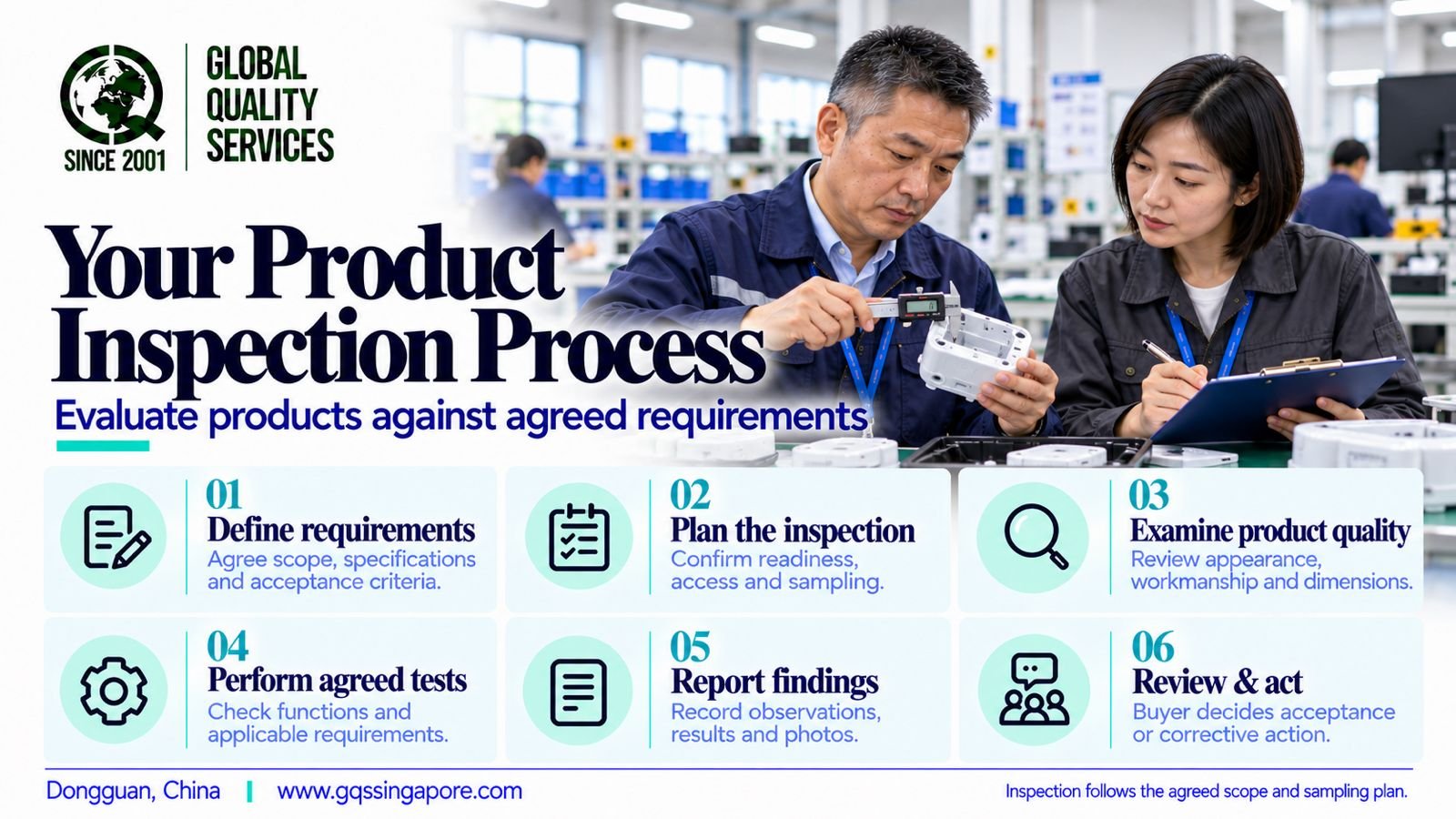
The inspection process should be based on the buyer’s requirements and the actual condition of the goods. The following stages outline a typical approach.
Step 1: Define the Inspection Requirements
Identify the product type, supplier location, order quantity, production stage and reason for inspection. Specify the critical quality characteristics and any contractual requirements that must be checked.
Step 2: Review Product Specifications
Relevant documents may include approved samples, technical drawings, product specifications, purchase orders, packaging instructions, labelling requirements and agreed test procedures.
These references establish the basis for evaluating conformity.
Step 3: Agree on the Inspection Plan
Determine the inspection scope, sampling approach, defect classifications, acceptance criteria and required checks. If a sampling standard or AQL-based plan is specified, its applicable parameters should be agreed before inspection.
Step 4: Conduct the Inspection
The inspector carries out the agreed checks on the selected products or units. Findings may include observed defects, measurements, functional check results, quantities and photographic evidence, depending on the inspection plan.
Step 5: Record and Report Findings
The inspection report documents the scope, checks performed, observations and results. Any limitations or checks not performed should be clear so that the findings are interpreted correctly.
Step 6: Review the Results
The buyer or responsible party reviews the findings against the agreed acceptance criteria and determines the next action. Depending on the outcome, this may involve accepting the inspected lot, requesting corrective action, arranging reinspection or considering additional testing.
The final decision remains subject to the applicable purchase terms and agreed acceptance process.
Product Inspection Services Across Dongguan’s Manufacturing Areas
Product inspection requirements can arise across Dongguan’s industrial and commercial districts, where manufacturers produce a wide range of consumer, electronic and industrial goods.
Potential areas relevant to inspection enquiries include:
- Chang’an: Electronics, precision components, hardware and manufacturing operations.
- Humen: Garments, textiles, accessories and consumer products.
- Houjie: Furniture, machinery, materials and related manufacturing activities.
- Dalang: Knitwear, textiles and other manufactured goods.
- Tangxia: Electronics, industrial products and component manufacturing.
- Songshan Lake: Technology-related businesses, research activities and advanced manufacturing.
- Chashan: Industrial production and consumer goods manufacturing.
- Dongcheng and Nancheng: Commercial operations, suppliers and businesses coordinating manufacturing and sourcing activities.
Inspection availability for a specific factory, product category and date should be confirmed before scheduling. The inspection scope and service arrangements depend on the project requirements.
Why Choose Global Quality Services for Product Inspection Services in Dongguan?
Product inspection needs to be based on clear criteria and objective observations. Before an inspection is arranged, buyers should establish what will be checked, which specifications apply and how findings will be recorded.
GQS Global Quality Services Pte Ltd provides inspection-related services for businesses seeking information about product quality and conformity with agreed requirements.
When arranging product inspection, key considerations include:
- A defined inspection scope: Specify the product characteristics and quality criteria to be checked.
- Product-specific checklists: Match the inspection method to the product’s design, function and manufacturing requirements.
- Objective findings: Record observed defects and deviations against the agreed criteria.
- Clear reporting: Document the inspection scope, results and relevant limitations.
- Defined acceptance criteria: Establish how findings will be evaluated and what action may follow an inspection.
- Service availability, inspection categories, scheduling and reporting arrangements should be confirmed with GQS before a project is booked.
Product inspection provides a documented checkpoint to evaluate manufactured goods against agreed specifications before they move to the next stage of the supply chain. For businesses sourcing from Dongguan, a suitable inspection plan can establish clear quality criteria for products, production batches and supplier deliveries.
Frequently Asked Questions
1. What is included in product inspection services in Dongguan?
Product inspection may include appearance, workmanship, dimensions, quantity, labelling, packaging and agreed functional checks. The exact scope depends on the product and inspection stage. Specialised safety testing, laboratory analysis and regulatory compliance testing are separate requirements unless specifically included in the agreed service.
2. When should I arrange a product inspection at a Dongguan factory?
The appropriate time depends on the purpose of the inspection. An initial production inspection checks early units, a during-production inspection evaluates goods while manufacturing continues, and a final or pre-shipment inspection examines finished products before dispatch. For recurring or high-risk orders, more than one inspection stage may be appropriate.
3. What is the difference between product inspection and pre-shipment inspection?
Product inspection is the broader service covering checks on goods at different manufacturing stages. Pre-shipment inspection is performed near the end of production, before dispatch, and commonly includes finished-product checks alongside agreed quantity, packaging and marking verification. The inspection scope determines the actual checks performed.
4. Can product inspection be conducted using AQL sampling?
Yes, where an appropriate sampling plan is agreed. Acceptance Quality Limit (AQL) sampling is a statistical approach used in lot inspection to determine sample sizes and acceptance or rejection criteria under the selected sampling scheme. AQL does not mean that the permitted percentage of defective products is guaranteed, and it does not establish that every unit is defect-free. The applicable standard, inspection level and defect criteria should be defined before the inspection.
5. How much do product inspection services in Dongguan cost?
The cost depends on the product category, inspection duration, order size, factory location, technical complexity and checks required. Additional equipment, specialised testing, travel or repeat inspections may affect the quotation. Provide the product details, factory address, production status and required inspection scope to obtain a project-specific estimate.