Water service providers in Jurong East need to meet customer expectations while maintaining reliable operations. ISO 24510:2024 helps organizations assess service quality and understand users’ needs. Singapore’s Ministry of Sustainability and the Environment reported a 7.2% water loss rate in 2025, among the lowest worldwide.
Global Quality Services helps businesses interpret the standard and identify practical improvements. An experienced consultant can guide your team through the requirements and help you choose the right assessment approach.
What Does ISO 24510 Mean for Your Organization?
Think about the last time a customer reported a service issue. Could your team explain how the complaint was handled, how long the response took, and whether the customer received a clear answer?
These are the kinds of questions worth examining when reviewing service quality under ISO 24510. The standard focuses on how users experience drinking water and wastewater services. It helps organizations assess whether their services meet user needs and identify where improvements may be necessary.
For a water service provider in Jurong East, this could mean reviewing complaint records, checking whether billing information is easy to understand, or examining how the organization communicates service interruptions. The exact areas will depend on the services you deliver and the people you serve.
One point deserves attention before you begin. ISO 24510 is a guidance standard, not a certifiable management system standard in its own right. Organizations should confirm the appropriate assessment or recognition route before advertising ISO 24510 certification. Global Quality Services can help you understand the standard’s scope and determine a suitable course of action.
Who Can Benefit from ISO 24510 Consulting in Jurong East?
The standard may be relevant to organizations that want to examine the quality of their drinking water or wastewater services from the user’s perspective.
These include:
- Public and private water service providers
- Wastewater collection and treatment operators
- Organizations responsible for customer services within water utilities
- Service contractors supporting water and wastewater operations
- Utility organizations reviewing customer communication and service performance
If your organization manages water-related services in Jurong East, a consulting review can help you determine whether ISO 24510 applies to your responsibilities. It can also help you identify the areas that need closer attention before committing resources to an assessment.
How Global Quality Services Experts Help You with ISO 24510 Certification in Jurong East
When you speak with a reputed consultant, you should expect clear answers, honest advice, and recommendations that suit your business. Global Quality Services brings the following strengths to the consulting engagement:
- Knowledge of international ISO standards and their practical application
- Consulting support tailored to your organization’s needs
- Regional service coverage across Singapore and other Asian markets
- Clear explanations of requirements, scope, and assessment options
- Practical recommendations based on identified service gaps
- Guidance on documentation and preparation for the agreed assessment
- Support in identifying related standards where they fit your business objectives
We help clients make informed decisions. That includes explaining what ISO 24510 can achieve, clarifying what it does not cover, and helping your team avoid spending time on activities that do not address the actual requirements.
Step-by-Step Process for ISO 24510 in Jurong East
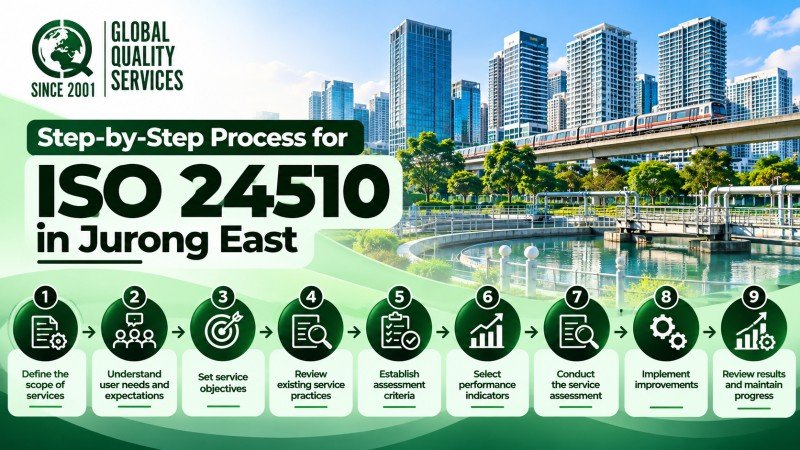
Follow these steps to assess your existing water services, identify performance gaps, and make practical improvements based on ISO 24510 guidance.
Step 1: Define the scope of services
Identify the drinking water or wastewater services your organization manages. Set clear boundaries for the assessment and identify the customer groups whose needs your team must consider.
Step 2: Understand user needs and expectations
Review customer complaints, feedback, service requests, and satisfaction records. Identify common concerns about service access, billing, communication, interruptions, and response times to understand what users expect.
Step 3: Set service objectives
Establish practical objectives based on user expectations and operational priorities. Define what good service looks like for your organization and decide how your team will measure progress.
Step 4: Review existing service practices
Examine current procedures for customer communication, service delivery, billing, complaint handling, and emergency notifications. Compare actual practices with your objectives to identify areas that need improvement.
Step 5: Establish assessment criteria
Choose suitable criteria to evaluate service quality and user satisfaction. Consider accessibility, reliability, communication, and complaint resolution, ensuring each criterion reflects your organization’s responsibilities and customer expectations.
Step 6: Select performance indicators
Choose measurable indicators that help your team track service results. Depending on your operations, these may include complaint resolution times, customer satisfaction scores, response rates, and service interruption notifications.
Step 7: Conduct the service assessment
Evaluate your current performance against the agreed objectives and criteria. Review relevant records, consult responsible staff, and identify differences between expected service levels and actual customer experiences.
Step 8: Implement improvements
Prioritize the gaps that affect users most. Assign responsibilities, set realistic deadlines, and update relevant procedures to address recurring complaints, communication problems, or other weaknesses identified during the assessment.
Step 9: Review results and maintain progress
Monitor performance indicators and customer feedback after implementing changes. Review whether the improvements address identified problems, and adjust your approach when results fall short of expectations.
What Should You Prepare Before Contacting a Consultant?
You do not need to overhaul your existing procedures before speaking with Global Quality Services. A few details about your organization will help us understand your needs and discuss the next steps.
Start by gathering information about:
- The drinking water or wastewater services your organization handles
- The customers or user groups your services support
- Your current complaint handling and communication arrangements
- Any service performance indicators you already monitor
- The problems you want to address or the improvements you want to make
This information gives the consulting discussion a useful starting point. It also helps you understand whether ISO 24510 is the right reference for your objectives or whether another standard deserves consideration.
For example, organizations that also want to strengthen their environmental management practices may benefit from reviewing ISO 14001 Environmental Management alongside their service improvement objectives.
Speak with Global Quality Services About ISO 24510 in Jurong East
Are you reviewing water service quality, customer feedback, or service performance in Jurong East? Talk to Global Quality Services before deciding on your next step. Our team can discuss your operational needs, explain the scope of ISO 24510, and help you identify a suitable consulting approach. Contact Global Quality Services today to discuss your requirements and receive guidance tailored to your organization.
Frequently Asked Questions
1. Can ISO 24510 help us understand recurring customer complaints?
Yes. Reviewing complaints alongside service records can help your team identify recurring concerns, understand user expectations, and prioritize service improvements.
2. Does ISO 24510 apply to wastewater service providers?
Yes. ISO 24510 covers user-related aspects of both drinking water and wastewater services, helping organizations assess service quality against users’ needs and expectations.
3. What information should we share during an initial consulting discussion?
Share details about your services, customer groups, current procedures, performance measures, and improvement goals. These details help the consultant understand your needs and discuss relevant options.
4. Can a small water service company use ISO 24510 guidance?
Yes. Smaller providers can use the guidance to review customer communication, service expectations, and performance. The scope of any review should reflect their actual services and responsibilities.
5. How do we know whether we need ISO 24510 or another water-related standard?
Start with your main objective. ISO 24510 focuses on services from the user’s perspective, while other water-related standards address utility management or different operational concerns. A consultant can help you compare their scopes.