Businesses in Changi Business Park operate across technology, financial services, software, research and development, high-value-added, and other knowledge-intensive activities. JTC designed business park space in Changi Business Park for high-technology, R&D, high-value-added, and knowledge-intensive businesses.
For organizations that accept, process, transmit or otherwise support payment card transactions, maintaining strong payment security is essential. PCI DSS Certification in Changi Business Park helps organizations establish appropriate controls to protect cardholder data and prepare for applicable PCI DSS validation requirements.
GQS Singapore provides PCI DSS consultancy, gap assessment, readiness support, documentation assistance, remediation guidance, and audit preparation for organizations seeking to strengthen their payment security framework.
Latest PCI DSS Updates for Changi Business Park Businesses
A key development for technology-driven businesses is coming in 2026. On 7 October 2026, PCI SSC published additional guidance on securing AI in payment environments. The guidance addresses how organizations can deploy AI securely, manage its potential misuse, and understand how AI fits within existing PCI security controls.
This is particularly relevant to Changi Business Park businesses using AI for payment processing, fraud detection, customer platforms, analytics, automation or other technology functions that may interact with payment environments.
What Are the Key PCI DSS Requirements?
PCI DSS v4.0.1 addresses a broad range of security controls covering the payment environment.
Key areas include secure network and system configurations, protecting stored account data, encrypting data in transit, access control, authentication, vulnerability management, malware protection where applicable, logging and monitoring, security testing, and information-security policies.
The standard is intended to be applied according to the organization’s specific environment. For example, a cloud-based software provider may have a very different PCI DSS scope than a business operating an on-site payment environment.
Which Industries in Changi Business Park Can Benefit From PCI DSS?
Changi Business Park is particularly relevant for PCI DSS certification because it concentrates technology and knowledge-intensive activities. JTC describes the business park environment as supporting high-technology, R&D, high-value-added, and knowledge-intensive businesses.
This makes PCI DSS particularly relevant to:
- Banking and financial services
- FinTech and payment technology
- Software and SaaS
- E-commerce
- IT and technology services
- Data and digital businesses
- Research and technology organizations
- Professional and business services
- Hospitality and F&B businesses accepting card payments
The actual applicability of PCI DSS should be determined by the organization’s payment flows and role within the payment ecosystem, not simply its industry.
Benefits of PCI DSS Compliance in Changi Business Park
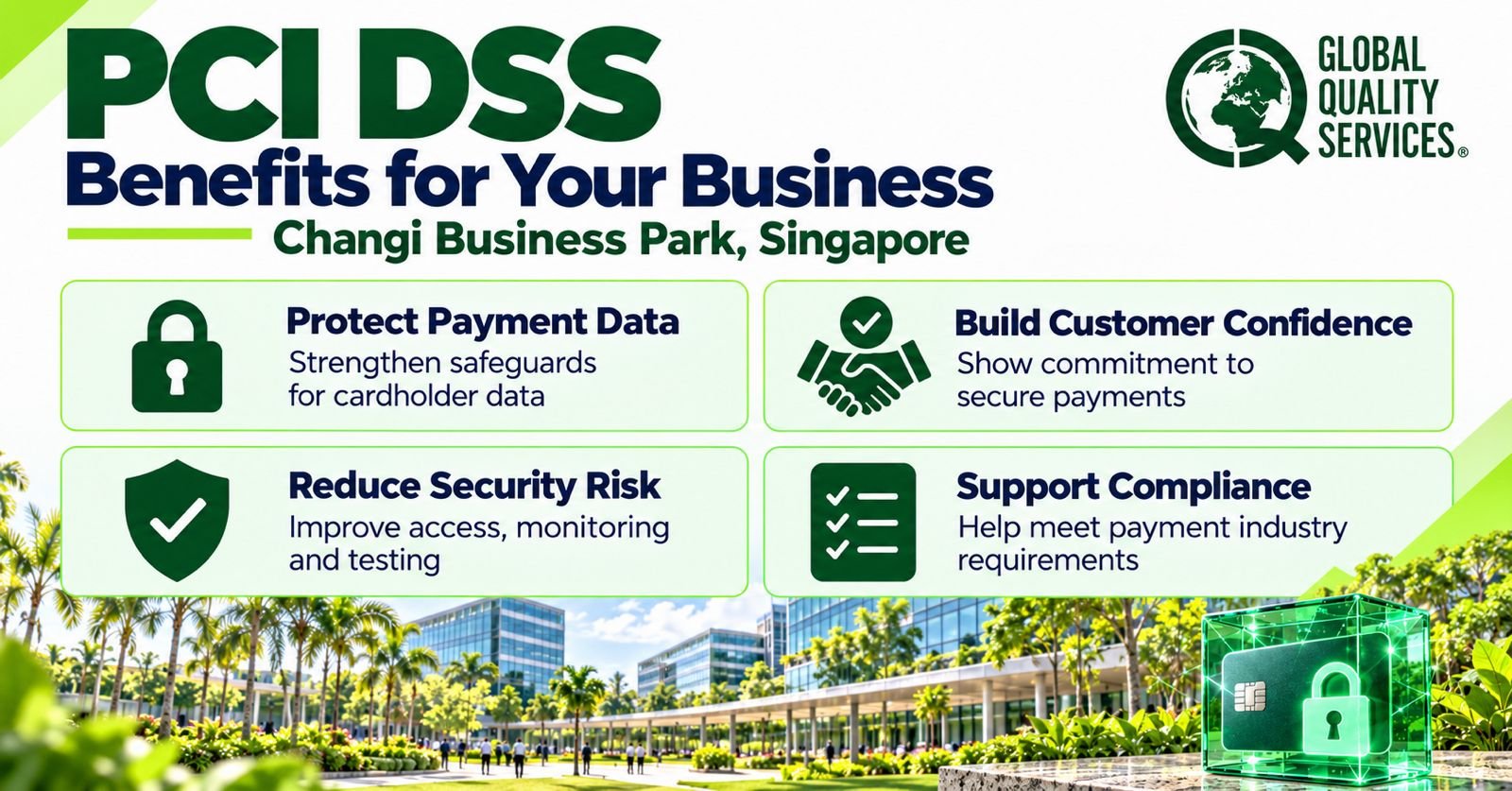
For businesses operating in Changi Business Park’s technology, financial services and knowledge-intensive environment, PCI DSS compliance can strengthen payment security while supporting customer trust and business relationships. Its value extends beyond meeting payment-security expectations.
Protects Cardholder Data
PCI DSS provides a structured framework for protecting payment card data against unauthorized access, disclosure and misuse. Strong controls around access, encryption, authentication, monitoring and vulnerability management can reduce exposure to payment-related security threats.
Strengthens Payment Security
A PCI DSS program helps organizations identify weaknesses across their payment environment and address them systematically. This can improve the security of payment applications, networks, systems and supporting processes.
Builds Customer and Partner Confidence
Customers, financial institutions, payment partners and corporate clients may expect businesses handling payment information to demonstrate appropriate security practices. Maintaining PCI DSS compliance can provide documented evidence of a structured approach to protecting payment data.
Improves Third-Party Risk Management
Technology businesses often depend on payment gateways, cloud platforms, software providers and other external service providers. PCI DSS encourages organisations to understand these dependencies and establish appropriate controls for managing third-party risks.
Supports E-Commerce and Digital Payments
For businesses operating websites, applications and digital payment platforms, PCI DSS can help strengthen controls around payment pages, applications, access, monitoring and security testing. This is particularly relevant as businesses expand their digital payment channels.
Helps Identify Security Gaps
A PCI DSS assessment can highlight weaknesses that may otherwise remain unnoticed. Addressing gaps in access management, vulnerability management, logging, authentication and other controls can contribute to a more mature security environment.
Supports Business Growth
A well-maintained PCI DSS framework can help organizations respond to customer security assessments, supplier due diligence and payment-partner requirements. This can be particularly valuable for growing technology and financial-services businesses operating in Changi Business Park.
Encourages Ongoing Security Improvement
PCI DSS is not simply a one-time compliance exercise. Maintaining applicable controls and reviewing changes to the payment environment encourages organizations to continually monitor and improve their payment-security practices.
How Does PCI DSS Scoping Work?
Correctly defining the PCI DSS scope is one of the most important parts of the compliance process.
The organization needs to understand where payment card data enters its environment, how it moves through systems, where it is stored if applicable, which applications process it, and which systems or personnel can affect its security.
Third-party payment processing can reduce the amount of cardholder data a business handles directly, but outsourcing does not automatically remove PCI DSS responsibilities.
A proper scoping exercise should therefore consider:
- Payment channels
- Cardholder data flows
- Applications and APIs
- Networks and systems
- Access points
- Cloud environments
- Third-party service providers
- Security controls affecting the payment environment
PCI DSS for E-Commerce and Digital Payment Environments
Digital payment environments require careful attention because payment pages, applications and browser-based technologies can introduce additional attack paths.
PCI DSS v4.x includes requirements to detect and prevent unauthorized changes to payment pages and protect against e-skimming-related risks.
For Changi Business Park’s technology and digital businesses, this makes application security, vulnerability management, authentication, access control and monitoring particularly important.
Organizations should also understand how third-party scripts, payment gateways, APIs, and externally hosted components interact with their payment environment.
What Is the PCI DSS Certification Process in Changi Business Park?
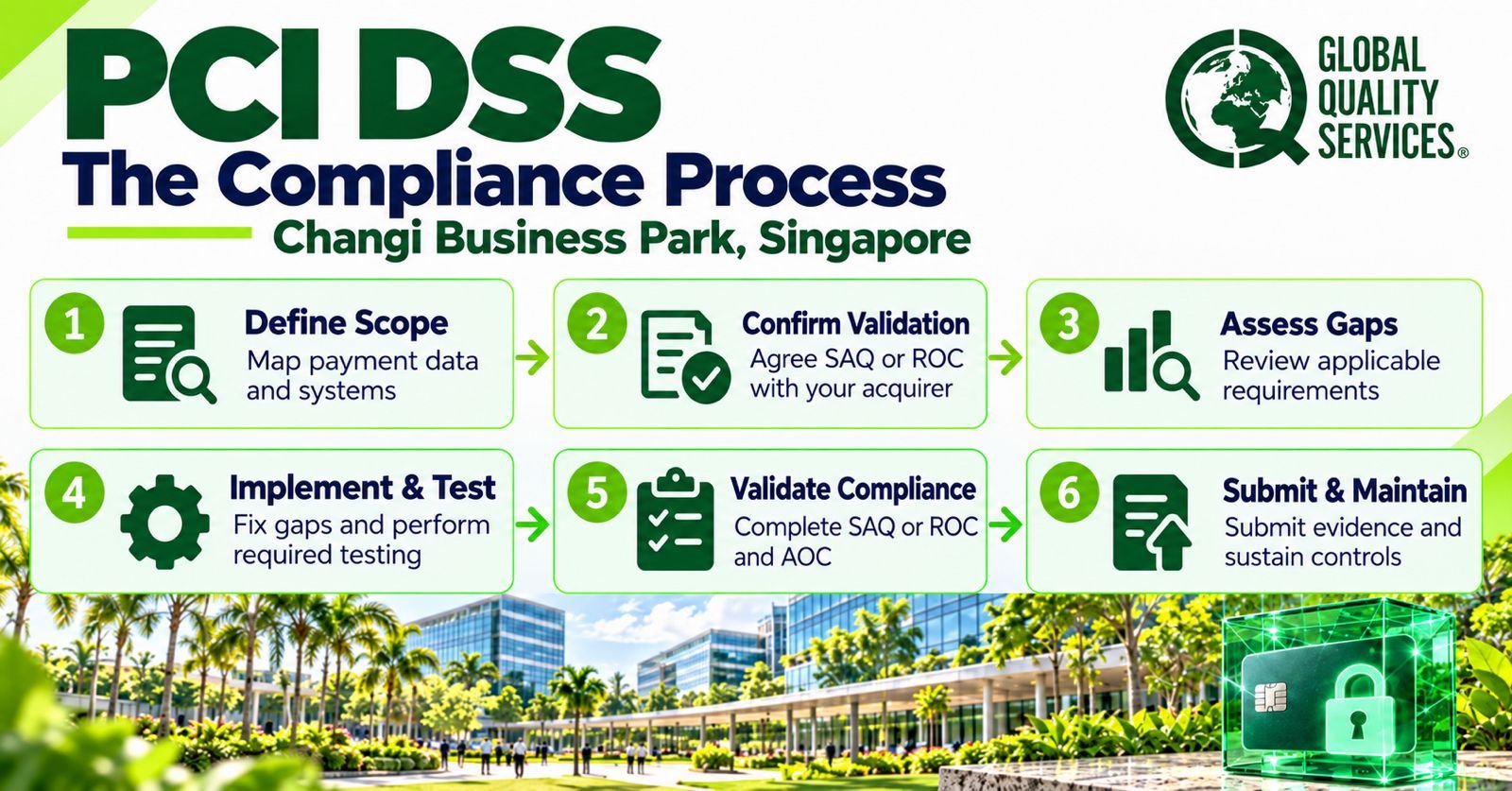
1. Understand the Payment Environment
The process begins by identifying payment channels, applications, systems, networks, cardholder data flows, and relevant third parties.
2. Define the PCI DSS Scope
The organization determines which systems and processes are in scope and which controls affect the security of payment card data.
3. Conduct a Gap Assessment
Existing security controls are reviewed against applicable PCI DSS requirements. The assessment identifies gaps, weaknesses, and areas requiring additional evidence or documentation.
4. Develop a Remediation Plan
Identified gaps are prioritized according to their security impact and business requirements. Remediation may involve changes to access controls, authentication, vulnerability management, logging, encryption, policies or security testing.
5. Implement and Document Controls
Controls are implemented and supporting procedures, records and evidence are prepared.
6. Complete the Applicable Validation
The organization completes the appropriate PCI DSS validation process based on its circumstances. This may involve an SAQ or a formal assessment resulting in an ROC and associated compliance documentation.
7. Maintain Ongoing Compliance
PCI DSS should not be treated as a one-time project. Organizations must continue operating their controls, monitoring changes, and preparing for future validation activities.
How Long Does PCI DSS Compliance Take in Changi Business Park?
No single PCI DSS timeline applies to every organization.
A smaller business with a limited payment environment and established security controls may require less preparation than a technology or financial organization with multiple applications, cloud environments, payment channels and third-party dependencies.
The timeline can be influenced by:
- PCI DSS scope
- Number of payment systems
- Existing security controls
- Amount of remediation required
- Third-party dependencies
- Documentation and evidence availability
- Applicable validation method
A PCI DSS gap assessment can provide a more realistic understanding of the work and timeline involved before formal validation.
What Factors Affect PCI DSS Cost in Changi Business Park?
PCI DSS costs depend on the organization’s environment, not its location alone.
The size and complexity of the cardholder data environment, number of systems, payment channels, third-party services, security gaps, and required validation method can all affect the overall cost.
Additional work may be required when organizations need to improve technical controls, restructure their payment environment, strengthen documentation,, or addresssignificant compliance gaps.
For this reason, an initial scope and gap assessment helps develop a more realistic PCI DSS budget.
Who Can Conduct a PCI DSS Assessment?
PCI SSC operates programs that train, test,t and qualify organizations and individuals involved in assessing and validating compliance with PCI standards.
The appropriate assessor or validation method depends on the organization’s applicable PCI DSS requirements.
GQS Singapore can support organizations before the formal assessment through readiness reviews, gap assessments, documentation support, remediation guidance, and audit preparation.
How Does PCI DSS Consulting Help?
PCI DSS consulting can help an organization understand its responsibilities before entering the formal validation stage.
For businesses in Changi Business Park, this can involve reviewing payment data flows, determining scope, evaluating existing controls, identifying gaps and preparing the documentation and evidence needed for the applicable assessment.
Consulting support can also help technology-driven businesses understand how cloud services, APIs, third-party providers, applications and AI-enabled systems interact with their payment environment.
How Does PCI DSS Renewal Work After Initial Compliance?
PCI DSS compliance requires ongoing validation under the organization’s applicable compliance program.
After the initial assessment, the organization must continue operating its required security controls and maintain appropriate evidence. Changes to payment systems, applications, service providers, infrastructure or business processes should also be reviewed to determine whether they affect PCI DSS scope or controls.
The exact validation frequency and documentation requirements can depend on the organization’s acquirer, payment brands, or other relevant compliance-accepting entity.
Role of PCI DSS and AI in 2026
AI is becoming increasingly relevant to payment security.
On 7 October 2026, PCI SSC published additional guidance on securing AI in payment environments. The guidance considers how AI is deployed, how organizations can reduce misuse-related risks, and how AI should fit within existing PCI security controls.
This is particularly relevant for Changi Business Park’s technology-oriented business environment.
An organization using AI for fraud detection, payment decisions, customer service, analytics, automation or other payment-related functions should understand whether those systems interact with its PCI DSS environment.
AI does not create a separate PCI DSS certification. Instead, organizations should assess how AI affects their existing payment environment, security controls, and risk profile.
How Global Quality Services Can Help
Global Quality Services supports organizations in Changi Business Park with PCI DSS gap assessments, scope reviews, readiness, documentation, and audit support. Our approach begins with understanding the organization’s actual payment environment rather than applying a generic checklist.
We can help review payment data flows, identify applicable requirements, assess existing controls, support remediation, and prepare evidence for the relevant validation process. With 26 years of experience in management-system and compliance consulting, GQS provides practical support for organizations seeking to strengthen payment security and maintain an effective compliance program.
A useful PCI DSS program should be aligned with the organization’s actual technology and payment environment.
GQS focuses on understanding the scope, identifying practical gaps, and helping organizations prepare for the applicable validation process. This approach is particularly useful for businesses with cloud infrastructure, digital platforms, third-party services and technology-driven payment environments.
Our support can be adapted to the organization’s size, complexity and existing security framework.
Frequently Asked Questions
How long does PCI DSS compliance take?
The timeline depends on the organization’s scope, payment environment, existing controls, remediation requirements, and applicable validation method. A readiness assessment can help establish a more realistic timeline.
How much does PCI DSS compliance cost in Singapore?
There is no standard cost for every organization. Costs depend on the complexity of the payment environment, scope, number of systems, existing controls, remediation work, and applicable validation requirements.
Can outsourcing payment processing remove PCI DSS obligations?
No. Outsourcing can reduce the systems directly handling cardholder data, but it does not automatically remove PCI DSS responsibilities. Organizations still need to understand their scope and manage relevant third-party relationships.
Does PCI DSS apply to AI-based payment systems?
AI does not create a separate PCI DSS certification. However, organizations should assess how AI systems interact with their payment environment and existing security controls. PCI SSC published additional guidance on securing AI in payment environments on 7 October 2026.
Does PCI DSS compliance automatically mean PDPA compliance?
No. PCI DSS focuses on payment card security, while Singapore’s PDPA addresses personal data protection. Organizations handling both payment card data and personal information should consider both frameworks’ requirements.