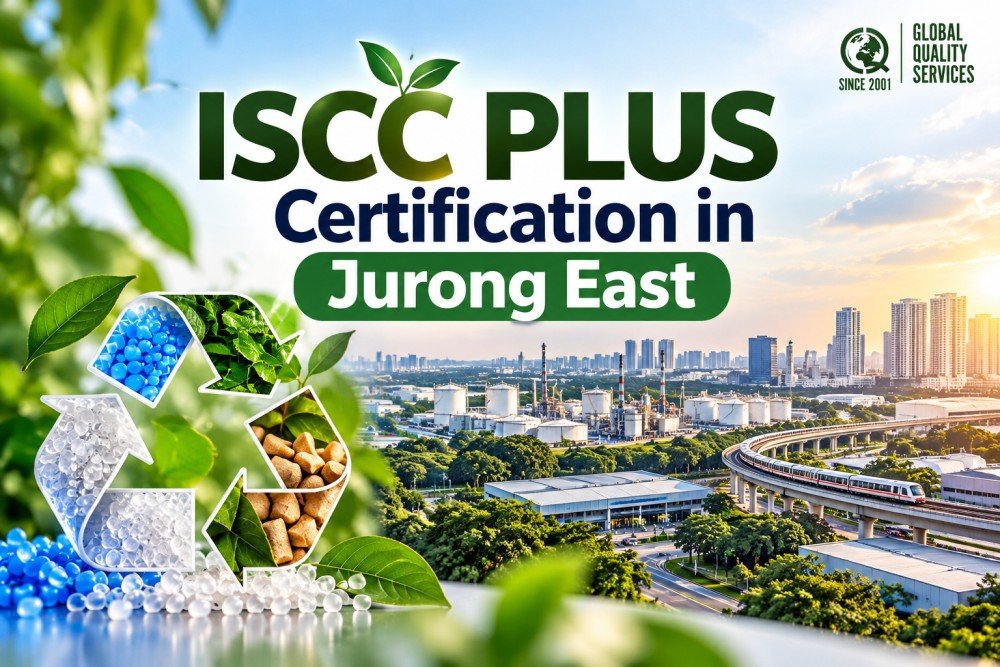
If your organization in Jurong East utilizes recycled plastic, plant-based feedstock, or other qualified alternative resources, clients may well pose a simple question: Can you prove the source of the material and its subsequent treatment? Without the right records, answering this query can become complicated when materials are passed through numerous suppliers, warehouses, and manufacturing stages.
ISCC PLUS certification gives businesses a recognized way to demonstrate the sustainability characteristics and traceability of eligible materials. The demand for this certification is growing. On July 24, 2025, ISCC reported that its ISCC PLUS program had issued 6,000 valid certificates worldwide. That growth reflects the increasing attention businesses are giving to recycled and bio-based supply chains.
For manufacturers, traders, processors, and packaging suppliers in Jurong East, proper preparation can make certification easier. Global Quality Services helps you understand the requirements, address gaps in your current system, and prepare your business for an independent audit.
What Does ISCC PLUS Certification Mean for Your Business
ISCC PLUS is a certification that is not mandatory and relates to companies that use suitable recycled, bio-based, and other alternative raw materials. It provides proof of traceability of materials and claims regarding sustainable business practices.
Companies need to be able to track their materials from sources to the manufacturing stage and keep records. The trading companies need to use suppliers’ documentation and keep transaction records. Each of the locations in the certification scope needs to comply with the requirements of ISCC PLUS.
Companies in Jurong East may use the certification to show that their sourcing of materials is responsible, meet customer expectations and set up relations with supply chain partners.
Why Consider ISCC PLUS Certification in Jurong East
A company may have a clear sustainability goal but still struggle to prove it. Supplier invoices, production records, stock figures, and sales documents often sit in different systems. When a customer requests evidence, the team must bring those records together and check whether the figures match. ISCC PLUS preparation helps address this problem.
- Meet customer sourcing requirements: If a customer requires certified recycled or bio-based materials, the relevant certification may be a condition of supplying that product or entering a particular supply chain.
- Keep material records consistent: Your purchasing, warehouse, production, and sales teams need to work with records that agree. This matters when materials are blended, processed, stored, or transferred between locations.
- Support responsible product claims: Certification can provide third-party verification of the sustainability characteristics covered by the applicable scope. Any claim made about a product must still follow the scheme’s rules and reflect the evidence available.
- Prepare for customer audits: Clear procedures and traceable records make it easier to respond when buyers ask about material origin, quantities, suppliers, or production controls.
- Reduce avoidable preparation work: Reviewing the system before the audit gives your team time to correct missing documents and inconsistent records instead of dealing with every issue at the last minute.
Which Businesses Can Benefit from ISCC PLUS Certification
ISCC PLUS may be relevant to several types of businesses operating in and around Jurong East. The right scope depends on the materials handled and the role your company plays in the supply chain.
- Plastics and Polymer Manufacturers
- Chemical and Petrochemical Companies
- Packaging Manufacturers
- Recycling and Material Recovery Businesses
- Traders, Distributors, and Storage Operators
What Does Your Company Need Before Applying
The amount of preparation required depends on how your business currently handles materials and records. These are the main areas worth reviewing before an audit.
Supplier and Material Records
Your company should be able to identify its suppliers, confirm the status of incoming materials, and retain the relevant purchasing and delivery documents. Sustainability declarations and other supporting records must be handled according to the applicable requirements.
Traceability Across Operations
You need a clear way to follow material movements through receiving, storage, production, and dispatch. The records should show where materials came from, how they were used, and what happened to the resulting products.
Chain-of-Custody Method
ISCC PLUS provides three chain-of-custody options: physical segregation, controlled blending, and mass balance. They are not interchangeable in every situation.
- Physical segregation: Materials with different certification statuses are kept physically separate as required by the selected approach.
- Controlled blending: Eligible materials are blended under defined conditions, with records supporting the certified share of the resulting product.
- Mass balance: Certified and non-certified materials may be physically mixed, while their sustainability characteristics are tracked through controlled accounting.
Inventory and Quantity Calculations
Where mass balance applies, the company needs reliable figures for incoming material, outgoing product, stock, and applicable production losses. The certified quantity attributed to output cannot exceed the amount supported by the applicable rules and records.
Employee Responsibilities
Purchasing, production, warehouse, quality, and sales staff should understand the parts of the system they handle. A procedure is only useful when employees follow it and record the work correctly.
How to Get ISCC PLUS Certification in Jurong East
Global Quality Services helps companies prepare for certification by reviewing their current practices and working through the requirements relevant to their scope.
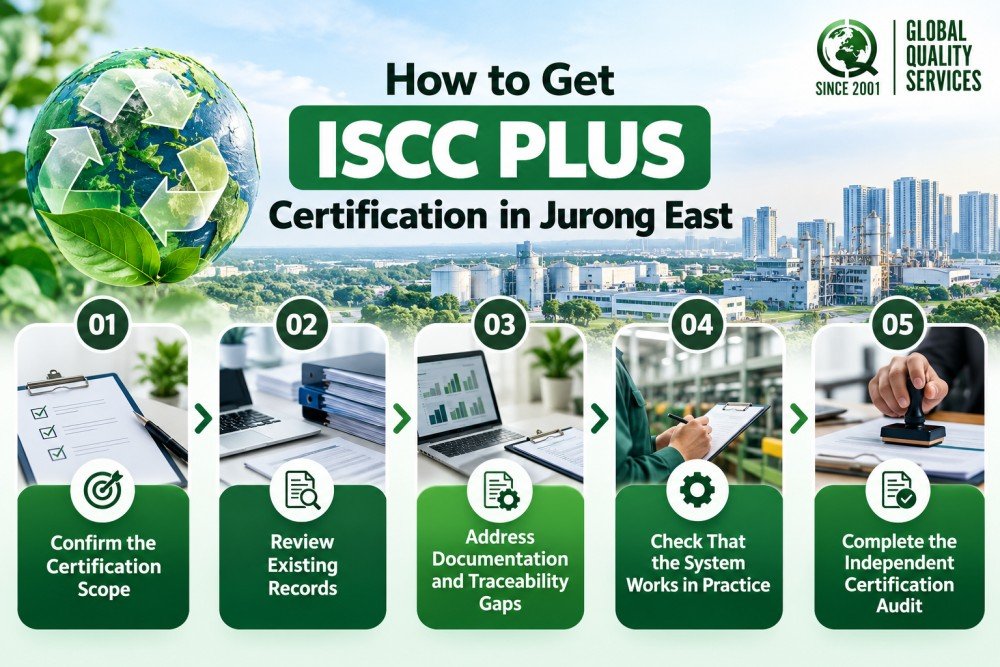
Step 1: Confirm the Certification Scope
Start by identifying the site, products, raw materials, and activities you want to include. This establishes which requirements apply and helps prevent confusion later in the process.
Step 2: Review Existing Records
Check supplier documents, purchase orders, stock records, production data, and sales documents. The aim is to find out whether the records tell a consistent story about material movement and sustainability characteristics.
Step 3: Address Documentation and Traceability Gaps
Prepare or revise the required procedures and records. If mass balance applies, check the calculations and ensure the recorded quantities match the supporting evidence.
Step 4: Check That the System Works in Practice
Review how employees handle materials and maintain records during normal operations. Resolve inconsistencies before the audit rather than relying on last-minute corrections.
Step 5: Complete the Independent Certification Audit
An authorized certification body assesses the company against the applicable ISCC PLUS requirements. If it identifies nonconformities, your company must address them in line with the certification body’s process before certification can be granted.
How Global Quality Services Experts Help You with ISCC PLUS Certification in Jurong East
When choosing a consultant, you should not just search for someone knowledgeable about standards. You want a team that understands your business needs, adheres to your constraints, and knows how to direct your employees. Global Quality Services is a well-known consulting company involved in certification and management system assistance:
- 26 years of experience, as stated in the company’s service profile.
- Consultancy support tailored to the company’s industry, site, and certification objectives.
- Practical guidance for businesses handling complex supplier and material records.
- Clear communication about requirements, preparation work, and identified gaps.
- Support focused on workable documentation rather than unnecessary paperwork.
- Guidance for employees responsible for purchasing, production, inventory, and traceability.
- Preparation support designed around the company’s actual processes and available resources.
- Assistance with maintaining a structured approach to compliance beyond the initial audit.
Related Certification Services
ISCC PLUS may be one part of a wider certification plan, depending on your customers, products, and operational priorities.
- ISO 14001 Environmental Management System Certification: Consider this standard if your company also needs a structured approach to managing environmental impacts and related obligations. Confirm the relevant service page with Global Quality Services before publishing the link.
- ISCC PLUS Certification in Singapore: Link this location page to your main Singapore ISCC PLUS service page so businesses can explore the certification requirements beyond Jurong East.
- ISO 9001 Quality Management System Certification: This may be relevant if your business also needs formal controls for product quality, consistent processes, and customer satisfaction.
Speak with Global Quality Services About ISCC PLUS Certification in Jurong East
When a customer requests ISCC PLUS certification or if your organization is planning to use recycled or bio-based materials, a review of your current procedures is a good first step.
Global Quality Services can assist you in analyzing your materials, internal site operations, suppliers’ history, and certification objectives. It will help you see which requirements must be fulfilled and what still needs to be done to prepare for a certification audit.
Contact Global Quality Services to discuss ISCC PLUS certification in Jurong East and request consultancy support suited to your business operations.
Our regional presence across Singapore, the Philippines, Indonesia, Malaysia, and China supports businesses with their certification needs across key Asian markets.
Frequently Asked Questions
1. Is ISCC PLUS certification required in Singapore?
ISCC PLUS is a voluntary certification system. But you must have ISCC PLUS certification if a client or partner expects this as part of their criteria for accepting your products. Your choice ultimately depends on your clients’ contractual obligations and target markets.
2. How long does it take to get ISCC PLUS certification?
There’s no universal timeframe for obtaining ISCC PLUS certification because the process varies based on your organization. If you already have control systems set up, then you probably won’t spend much time preparing compared to organizations setting up new traceability processes from scratch.
3. Can a small company located in Jurong East get ISCC PLUS certification?
Maybe. It depends on the activities, material types, and scope of certification rather than the size of the firm. The firm will have to satisfy the criteria and keep track of everything related to its certified operations.
4. What documents do we need to prepare?
Some example documentation includes supplier lists, procurement records, sales records, shipping documents, sustainability claims, inventory logs, manufacturing processes, mass balances when applicable, and standard operating procedures. But this is only an illustrative list, depending on your scope and chain of custody approach.
5. Does ISCC PLUS certification apply to all sites belonging to the same company?
No. It covers your site within the approved scope of operations. For firms running several facilities, check the certification criteria for each facility separately.