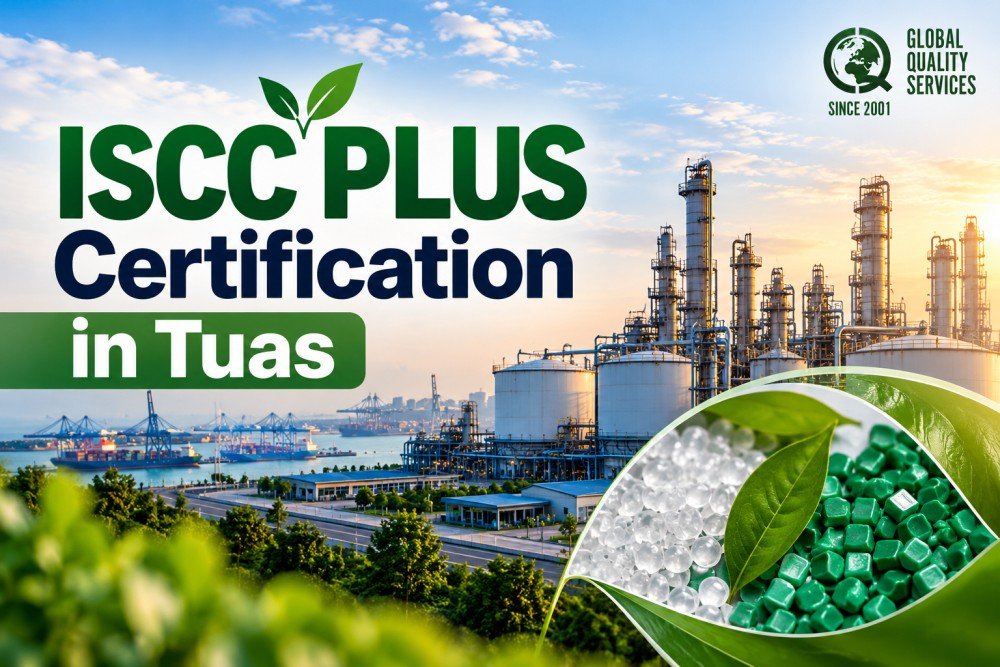
Recycled or renewable feedstocks can come from a supplier, but this isn’t necessarily enough for a customer who demands proof of sustainability. There’s likely interest in knowing where the material originated, how the tracking took place, and whether any claims made on sustainability align with some kind of recognized certification process. ISCC PLUS Certification in Tuas could provide such proof.
Tuas is home to substantial industry sectors, especially in chemical and manufacturing activities. According to the Singapore Economic Development Board, the energy & chemicals sub-sector makes up roughly 20% of the nation’s total manufacturing production. Businesses operating in this environment will discover that proven material traceability impacts approvals and trust in supply chains significantly.
Global Quality Services assists companies seeking ISCC PLUS certification through evaluating current control systems, recognizing areas needing documentation support, and advising on specific standards applicable to each company. GQS begins by learning about your materials and processes rather than presenting generic questionnaires. Your business should consider these points before pursuing ISCC PLUS certification.
What Does ISCC PLUS Certification Cover
ISCC PLUS is a voluntary sustainability certification framework applicable to eligible renewable, bio-based, recycled, and circular materials. It deals with sustainability attributes and traceability in the relevant portion of the supply chain.
Take, for instance, the acquisition of recycled raw materials by a plastics manufacturer. An acquisition invoice can document the amount acquired, but there may be additional documentation required to substantiate a sustainability claim. Documentation of the sourcing, storage, processing, and accounting for the material will be necessary.
There are ISCC PLUS requirements for each of those processes. The specific requirements will vary according to the operations conducted by the firm and the certification scope selected. Companies can adopt various chain-of-custody strategies:
- Mass balance: Tracks eligible material quantities and associated sustainability characteristics through controlled accounting.
- Physical segregation: Keeps certified materials separate from non-certified materials.
- Controlled blending: Allows specified materials to be combined under the applicable scheme rules.
Why ISCC PLUS Matters for Businesses in Tuas
For an industrial business, certification should address a real commercial or operational need. That need might come from a customer’s procurement policy, a new product line using recycled feedstock, or a supply chain that requires documented sustainability claims.
Customer Approval and Supplier Qualification
Some buyers require suppliers to hold a recognized sustainability certification before approving particular materials or products. If your business intends to serve these customers, understanding their requirements early can prevent unnecessary delays during supplier qualification.
ISCC PLUS may help meet such requirements when the customer’s specifications recognize the scheme and your certificate covers the relevant activities and materials.
Better Control Over Material Records
Material traceability becomes more demanding when a facility handles several feedstock types or combines materials during production. Purchasing records, warehouse movements, production data, and sales documents must tell a consistent story.
A gap in one record can make it harder to verify a claim. Reviewing these records before an audit gives your team time to correct inconsistencies.
Support for Recycled and Renewable Materials
Manufacturers may want to introduce alternative feedstocks without losing control over material accounting. ISCC PLUS provides a framework for documenting eligible materials and their sustainability characteristics.
Certification does not automatically establish that every product is sustainable or that every environmental claim is valid. Claims must match the certified scope, the applicable rules, and the evidence available.
Fewer Surprises During the Audit
An audit can expose problems that routine production activities do not reveal. Supplier documents may be incomplete, inventory figures may not reconcile, or employees may follow different procedures for recording material movements.
A readiness review helps identify these problems before the formal assessment.
Which Tuas Businesses May Need ISCC PLUS Certification?
The suitability of ISCC PLUS depends on the materials handled and the activities performed, rather than the business’s industry label alone.
- Chemical and petrochemical manufacturers
- Plastics and packaging manufacturers
- Recycling and waste processing facilities
- Industrial material processors
- Raw material traders and distributors
- Warehousing and storage businesses
What Your Business Needs Before Applying
Preparation usually involves more than collecting policies. The records must reflect what happens at the site, and the employees responsible for those activities must understand the controls.
Define the Site and Certification Scope
List the activities you want covered, the materials involved, and the relevant supply chain stages. If your company operates multiple facilities, determine which sites and activities belong in the proposed scope.
Check Supplier Documentation
Review the records received from suppliers. Depending on the materials and applicable requirements, these may include sustainability declarations, delivery documents, purchase records, and other evidence needed to establish material characteristics. Missing or inconsistent supplier information should be addressed early.
Review Material Accounting
Your records should connect incoming materials with inventory movements, production activities, and outgoing products. If you use mass balance, check the quantities, conversion factors, stock movements, and accounting periods against the applicable scheme rules.
Document How Materials Are Handled
Write down the procedures used for receiving, identifying, storing, processing, and dispatching materials. The procedures should reflect actual working practices. A document that employees do not follow will not solve a traceability problem.
Prepare the Employees Involved
Purchasing, production, warehouse, inventory, and sales staff may each hold part of the evidence needed for certification. Assign responsibilities clearly so records can be retrieved and explained when required.
How to Get ISCC PLUS Certification in Tuas
The preparation process should follow your actual operations. These five stages provide a practical starting point.
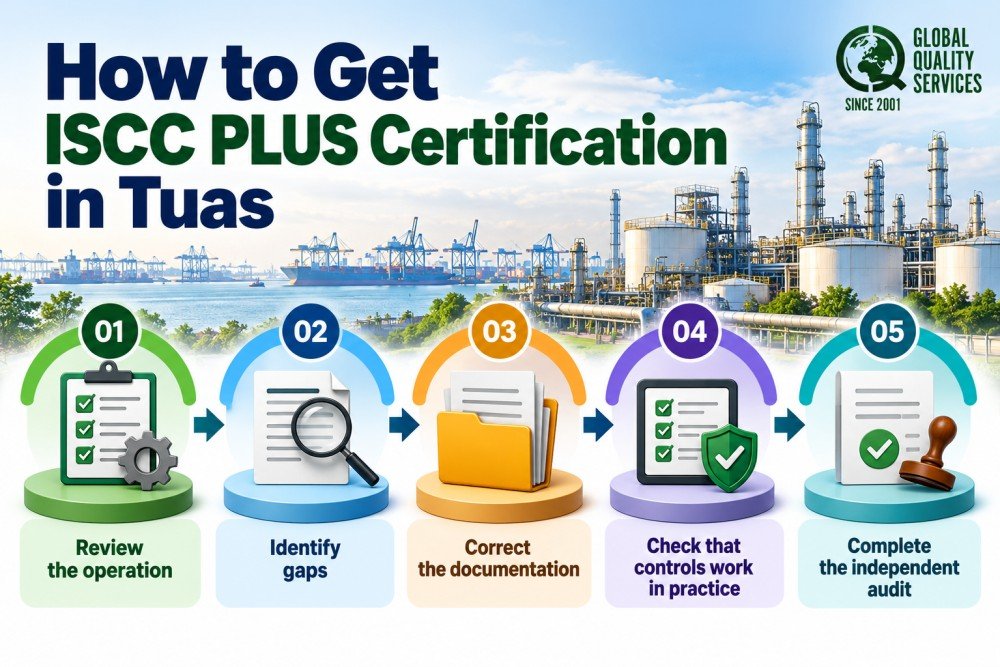
- Step 1: Review the operation: Identify the materials handled, suppliers involved, production processes, and customer requirements that determine the proposed scope.
- Step 2: Identify gaps: Compare existing records and working procedures with the applicable ISCC PLUS requirements. Note missing evidence, accounting discrepancies, and unclear responsibilities.
- Step 3: Correct the documentation: Update procedures and organize supplier records, transaction documents, production information, and material accounting records where applicable.
- Step 4: Check that controls work in practice: Review sample transactions from incoming materials through to finished products. Confirm that the records agree and that employees follow the documented procedures.
- Step 5: Complete the independent audit: Arrange an audit with an appropriately qualified ISCC certification body. Address any nonconformities according to the body’s requirements and the applicable scheme rules.
How Global Quality Services Experts Help You with ISCC PLUS Certification in Tuas
Choosing a reputed consultant means looking for practical advice, clear communication, and a sound understanding of certification requirements. Global Quality Services supports businesses preparing for certification and helps them organize the work required before an independent audit.
- Reputed consultant offering professional certification consulting support.
- Guidance tailored to the business’s activities, materials, and supply chain.
- Assistance with documentation, traceability records, and applicable material accounting.
- Gap identification to help prioritize corrective actions.
- Practical preparation guidance for employees responsible for certification records.
- Support in understanding related management system certifications where relevant.
The value of consulting lies in knowing what needs attention and why. Your team should leave the preparation stage with a clear understanding of its responsibilities, the records it must maintain, and the gaps it still needs to close.
Related Certification for Tuas Businesses
ISCC PLUS and environmental management certification address different requirements.
ISO 14001 Environmental Management System Certification provides a framework for managing environmental aspects, compliance obligations, and continual improvement. It may be relevant if your business also needs a formal environmental management system, but it does not replace ISCC PLUS requirements.
Whether both certifications are appropriate depends on your operations and customer requirements.
Discuss ISCC PLUS Certification Requirements with Global Quality Services
If a customer has requested ISCC PLUS certification, or your business plans to supply materials that require verified sustainability information, begin by checking the scope and evidence needed.
Contact Global Quality Services to discuss your Tuas facility, the materials you handle, and the records already in place. This review can help establish the preparation work required before you approach an independent certification body.
Speak with Global Quality Services about ISCC PLUS certification preparation in Tuas and establish a clear plan for closing documentation gaps and preparing for the audit.
Frequently Asked Questions
1. What is ISCC PLUS certification used for?
ISCC PLUS provides a framework for verifying sustainability characteristics and traceability for eligible renewable, bio-based, recycled, and circular materials. Businesses use it to support applicable supply chain and customer requirements.
2. How long does certification take?
The timeline depends on the scope, the state of existing records, the corrective work required, and audit availability. A readiness assessment can help establish a more realistic schedule.
3. Can Global Quality Services guarantee certification?
No consultant can guarantee an independent certification decision. Global Quality Services can assist with understanding requirements, reviewing documentation, identifying gaps, and preparing for the audit.
4. How often does ISCC PLUS certification need renewal?
ISCC PLUS certificates are generally valid for 12 months under the scheme’s certification framework. Businesses must follow the applicable recertification requirements to maintain certification.
5. What is the first step for a Tuas business?
Define the site activities and materials to be included. Then review supplier documentation, traceability records, and customer requirements. A consultation with Global Quality Services can help determine the next steps.