Environmental, Social and Governance (ESG) performance is increasingly important for businesses operating in Singapore’s financial district. For organizations at Marina Bay Financial Center (MBFC), a structured ESG approach can help meet stakeholder expectations, improve sustainability reporting, and strengthen business decision-making.
Global Quality Services provides ESG consulting services in Marina Bay Financial Center to help organizations identify relevant ESG priorities, assess current practices and develop a practical improvement roadmap. Our approach links sustainability objectives to business operations, risk management, and reporting needs.
Whether your organization is preparing its first ESG report, responding to investor questions, or reviewing its sustainability strategy, our support can help you move from broad commitments to measurable actions.
Why Is ESG Consulting Important for Businesses at Marina Bay Financial Center?
Marina Bay is an established financial and commercial hub, with major financial institutions and businesses contributing to Singapore’s international business environment. As a financial center, the district makes ESG considerations particularly relevant for organizations managing investor expectations, corporate risks, and regional business relationships. The Urban Redevelopment Authority’s overview of Marina Bay provides further context on the area’s development as a major financial hub.
For businesses based at MBFC, ESG consulting can help address practical questions such as:
- Which environmental, social, and governance topics matter most to our business?
- What sustainability information do investors, clients and business partners expect?
- How can we collect reliable ESG data across departments or regional offices?
- Are our sustainability disclosures consistent with our actual policies and performance?
- What improvements should we prioritize in the coming financial year?
A well-planned ESG program helps organizations answer these questions with documented evidence, clear responsibilities, and realistic targets, rather than relying on general sustainability statements.
What ESG Consulting Services Do Consultants Provide?
ESG requirements vary by industry, business size, operating model, and stakeholder expectations. GQS can help organizations develop an approach that reflects their circumstances and sustainability objectives.
ESG Gap Assessment and Materiality Review
An ESG assessment provides a starting point for understanding current practices. It examines relevant policies, existing disclosures, operational information and governance arrangements to identify gaps and areas for improvement.
A materiality review helps prioritize the ESG topics that matter most to the organization and its relevant stakeholders. For a financial services business, these could include climate-related financial risks, data privacy, responsible business conduct, workforce practices or supply chain considerations, depending on its activities.
ESG Strategy and Action Planning
An ESG strategy translates assessment findings into an organized improvement plan. It sets priorities, assigns responsibilities, and identifies the resources needed to achieve defined objectives.
Global Quality Services can help organizations structure their ESG roadmap around:
- Short-term priorities and longer-term sustainability objectives
- Measurable performance indicators and reporting responsibilities
- Policies, controls and internal accountability
- Timelines for implementing improvements and reviewing progress
The aim is to make ESG part of business planning rather than treating it as a separate reporting exercise.
Sustainability Reporting and Disclosure Readiness
Preparing a sustainability report requires more than gathering environmental figures. Organizations need to determine which disclosures matter, establish reliable data-collection methods, and explain their performance in a clear, consistent format.
Consulting support can help businesses identify suitable reporting frameworks, organize information, and prepare documentation for internal review. Depending on the organization’s circumstances, relevant references may include the Global Reporting Initiative (GRI) Standards and the International Sustainability Standards Board’s IFRS Sustainability Disclosure Standards.
The appropriate framework should be selected according to the organization’s reporting obligations, stakeholder needs and intended use of the report.
Climate-Related Risk and Environmental Performance
Climate-related issues can affect business continuity, investment decisions, operating costs and long-term planning. ESG consulting can help organizations identify relevant climate risks and opportunities, determine which environmental indicators to monitor and establish a process for reviewing performance.
Potential areas of assessment include greenhouse gas emissions, energy consumption, resource use and climate-related risk disclosures. The scope depends on the organization’s operations and applicable reporting requirements.
Governance, Ethics and Social Responsibility
A credible ESG program also considers how an organization is managed and how it treats employees, customers, suppliers and other stakeholders.
GQS can help businesses review relevant policies and processes covering areas such as business ethics, accountability, employee welfare, diversity, responsible procurement and stakeholder engagement. The selected topics should reflect the organization’s material risks and business context.
Which ESG Priorities Are Relevant to Different Businesses at MBFC?
Organizations operating in the same commercial district may face different ESG expectations. A financial institution, a fintech business and a regional corporate office will not necessarily require the same assessment or reporting approach.
| Business type | Potential ESG priorities | Consulting focus |
|---|---|---|
| Banks and financial institutions | Climate-related risks, governance, responsible financing and disclosures | ESG risk assessment and reporting readiness |
| Asset managers and investment firms | Investment-related ESG considerations, data quality and transparency | Materiality review and disclosure planning |
| Fintech and technology businesses | Data governance, employee practices, energy use and supplier risks | ESG policies, performance indicators and controls |
| Professional services firms | Business ethics, workforce wellbeing, procurement and resource use | ESG assessment and action planning |
| Regional headquarters | Consistent policies, regional data collection and group-level reporting | ESG governance and coordination across locations |
ESG governance and coordination across locations
These are illustrative priorities, not mandatory requirements for every organization. The final scope should be established through an assessment of the company’s activities, reporting obligations and stakeholder expectations.
How Does ESG Consulting Work?
An effective ESG engagement should produce practical outputs an organization can use after the assessment.
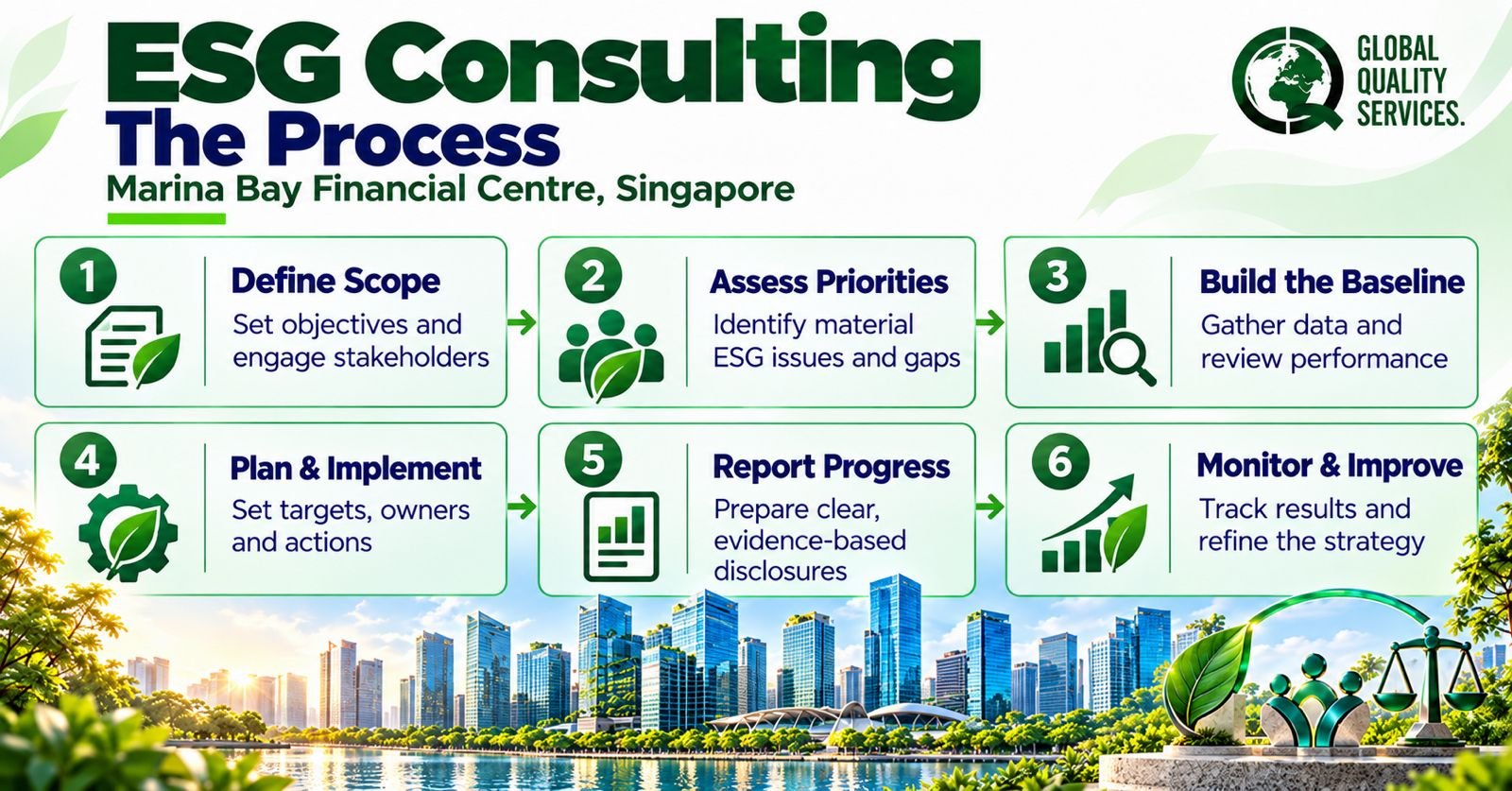
1. Understand the Business and Its Objectives.
First, understand the organization’s activities, operating structure, stakeholder expectations, and existing sustainability commitments. This helps define the engagement’s purpose and scope.
2. Assess Current ESG Practices
Relevant policies, data, reports and internal processes are reviewed to identify strengths, information gaps and areas requiring further attention.
3. Prioritize Material ESG Topics
The organization identifies the environmental, social and governance issues most relevant to its operations and stakeholders. It also considers reporting expectations and applicable requirements.
4. Develop an ESG Roadmap
Assessment findings are translated into prioritized actions, measurable objectives, responsibilities and proposed timelines. The roadmap should reflect available resources and business priorities.
5. Organize Data and Reporting
Relevant performance indicators, data owners and documentation requirements are established. Where appropriate, the organization can use this information to prepare sustainability disclosures and monitor progress over time.
6. Review and Improve
ESG performance should be reviewed periodically so that the organization can evaluate progress, address new risks and update its priorities as its business or reporting obligations change.
ESG Consulting and Singapore’s Sustainability Reporting Requirements
Singapore has introduced a phased sustainability reporting roadmap for listed companies and certain large non-listed companies. Requirements vary by listing status, company size, and the applicable financial year.
The Accounting and Corporate Regulatory Authority (ACRA) publishes the current requirements and implementation timelines. Organizations should check the latest guidance to determine which obligations apply to them.
Eligible companies may also wish to review the Sustainability Reporting Grant and other available support programs. Eligibility conditions, qualifying costs, and application requirements apply, so funding is not guaranteed.
ESG consulting can help an organization assess its reporting readiness, organize the information it needs, and plan improvements. However, consulting support does not automatically satisfy statutory reporting obligations or replace any independent assurance required under applicable rules.
What Are the Benefits of ESG Consulting for MBFC Businesses?
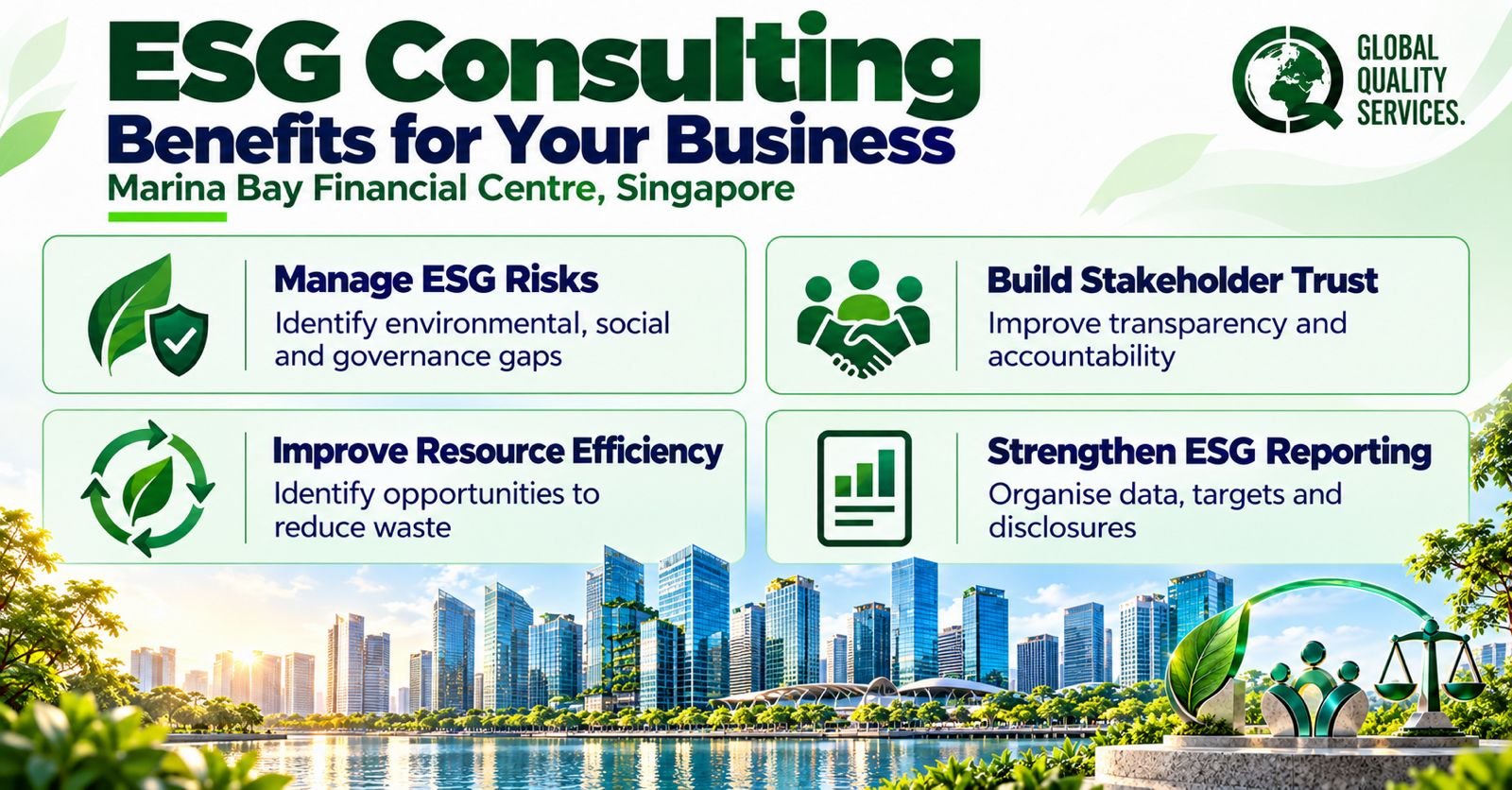
A structured ESG program can deliver value beyond publishing a sustainability report.
- Clearer priorities: Identify the ESG issues that deserve management attention and allocate resources accordingly.
- Better information management: Establish clearer responsibilities for collecting, checking, and maintaining ESG data.
- Stronger governance: Improve documentation, accountability and oversight of sustainability-related risks.
- More consistent disclosures: Align internal information with theorganization’ss selected reporting framework and relevant stakeholder requirements.
- Measurable improvement: Translate sustainability commitments into defined actions, indicators and review cycles.
Results depend on the quality of the underlying data, management involvement, and implementation of agreed actions.
Why Choose Global Quality Services for ESG Consulting?
Global Quality Services supports organizations seeking a structured approach to sustainability and management system improvement. With 26 years of experience, we help businesses understand their requirements, identify gaps, and establish practical processes that support their objectives.
Our consulting approach starts with the organization’s current position, rather than assuming every business needs the same ESG program. We can help define priorities, organize documentation, develop an action plan, and prepare for relevant reporting needs.
For businesses at Marina Bay Financial Center, this provides a practical starting point for integrating ESG considerations into governance, operational planning and stakeholder communication.
Start Your ESG Consulting Journey in Marina Bay Financial Center
Whether your organization is developing its first ESG roadmap or reviewing an established sustainability program, the next step is to understand your current position and identify the improvements that matter most.
Contact GQS to discuss your ESG consulting requirements in Marina Bay Financial Center. We can help you identify relevant priorities and plan a structured approach aligned with your business objectives and applicable reporting expectations.
Frequently Asked Questions
1. Does a company need an ESG report if it is not listed on the Singapore Exchange?
Not necessarily. Reporting obligations depend on the organization’s circumstances and applicable requirements. However, private companies may still receive ESG information requests from investors, lenders, customers or business partners. A gap assessment can help determine whether formal reporting is necessary and what information the company should prepare.
2. Can a Singapore company use its parent company’s ESG report?
It may be possible to report through a group-level sustainability report, depending on the reporting framework and applicable requirements. The company should confirm whether its activities, relevant data, and material impacts are adequately covered and whether local disclosure obligations are met. Group reporting should not be assumed to remove every subsidiary’s reporting responsibilities.
3. What is the difference between ESG consulting and sustainability reporting?
ESG consulting can cover a broader range of activities, including materiality assessments, strategy development, governance, risk management, performance indicators,s and reporting readiness. Sustainability reporting focuses on communicating relevant sustainability information in a structured report. Reporting may be part of an organization’s wider ESG program.
4. What can a company do if its suppliers cannot provide reliable ESG information?
The company can begin by identifying which suppliers and data points are most significant to its ESG priorities. It can introduce supplier questionnaires, establish minimum documentation requirements, and engage key suppliers to improve data quality. Where information remains unavailable, the company should record the limitation, explain its approach transparently and develop a plan to improve supplier reporting over time.
5. Does engaging an ESG consultant guarantee that a company will qualify for a sustainability grant?
No. Engaging a consultant does not guarantee funding approval. Grant eligibility depends on the program’s published criteria, the applicant’s circumstances, qualifying activities, and the application process. Companies should review current requirements and confirm them with the relevant administering agency before making funding assumptions.